Every industry that deals with liquids and solids needs a reliable filter press machine. Whether it’s removing impurities, recovering valuable materials, or treating wastewater, the right filtration system can save both time and money. But with so many types and sizes available, choosing the perfect filter press machine can feel confusing.
This guide will help you understand how to choose the right filter press machine for your business, step by step, in simple language.
🏭 What Is a Filter Press Machine?
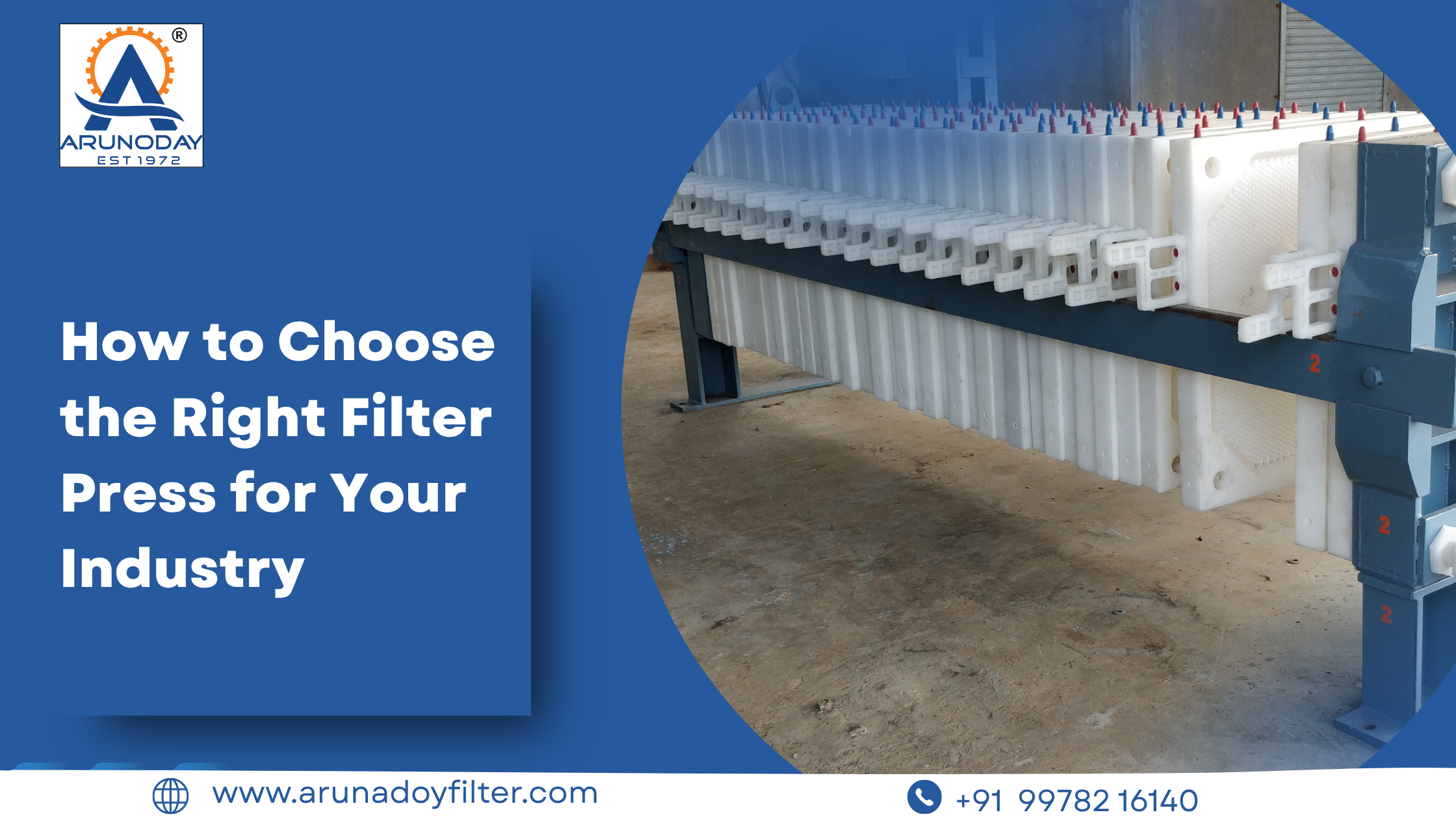
A filter press machine is industrial equipment used to separate solids from liquids. It works by pumping slurry (a mixture of solids and liquid) between filter plates. These plates are fitted with filter cloths that trap the solids while allowing the clean liquid to pass through. The result is a dry solid cake and clear filtrate.
This process is known as solid-liquid separation, and it’s used across industries like chemicals, pharmaceuticals, food, mining, and wastewater treatment.
In short, if your process involves liquid waste, slurry, or suspension, a filter press machine can help you purify, recover, or recycle it efficiently.
⚙️ Why Choosing the Right Filter Press Machine Matters
Every industry has a different type of slurry, capacity, and output requirement. Choosing the wrong filter press machine can lead to:
- Poor filtration performance
- Frequent maintenance
- Higher operating costs
- Product contamination or waste
But when you select the right one, you get:
✅ Better efficiency
✅ Lower energy use
✅ Consistent output quality
✅ Long machine life
That’s why it’s important to understand your needs before making a purchase.
🧾 Step 1: Know Your Industry and Application
The first step is to identify what type of liquid-solid separation your process requires.
Each industry uses a filter press machine for different reasons:
- Chemical Industry: Removing impurities or recovering chemicals.
- Pharmaceutical Industry: Clarifying syrups or washing intermediates.
- Food & Beverage: Purifying sugar, juice, starch, and oils.
- Mining & Minerals: Separating valuable metals and minerals.
- Textile & Dye: Treating wastewater from dye processes.
- Wastewater Treatment Plants (ETP/STP): Dewatering sludge and reducing waste volume.
Knowing your process helps you decide the plate type, pressure requirement, and automation level for your filter press.
🔩 Step 2: Decide the Type of Filter Press Machine
Filter presses come in various designs, and choosing the right one depends on your operation size, labor availability, and budget.
1. Manual Filter Press
Operated manually, suitable for small-scale industries or lab setups.
But it’s time-consuming and labor-intensive.
💡 Today, most industries prefer hydraulic or semi-automatic models for better efficiency.
2. Hydraulic Filter Press Machine
Operates through a hydraulic system powered by a power pack and cylinder.
It provides consistent pressure and faster filtration.
✅ Best for medium to large-scale operations.
3. Semi-Automatic Filter Press Machine
Combines hydraulic power with semi-automation to reduce manual effort.
Ideal for industries looking for reliability and productivity at a moderate cost.
✅ Offers a balance between automation and affordability.
4. Fully Automatic Filter Press
For large-scale industries needing continuous operation.
It runs automatically, plate shifting, cake discharge, and washing are all automated.
✅ Perfect for high-volume production with minimal labor.
🧱 Step 3: Choose the Right Filter Plates
Filter plates are the heart of a filter press machine.
They determine filtration quality, cake thickness, and pressure tolerance.
The most common type is PP Filter Plates (Polypropylene Plates), known for being lightweight, corrosion-resistant, and durable.
Types of PP Plates:
- Standard Chamber Plates – for normal filtration needs.
- CGR (Zero Leakage) Plates – fitted with O-rings to prevent leakage.
- Plate & Frame Type Plates – used for fine filtration.
- Membrane Plates – for squeezing and maximum cake dryness.
💡 Always choose PP filter plates made from 100% virgin material for longer life and better performance.
🔧 Step 4: Understand Pressure and Hydraulic System
A strong hydraulic system ensures even pressure across the plates, essential for complete filtration.
The power pack and hydraulic cylinder help in opening and closing the plates smoothly.
When choosing a filter press machine, ensure that the hydraulic components are:
- Made with high-quality materials
- Easy to maintain
- Suitable for your process pressure range
Reliable pressure = better separation and longer plate life.
📏 Step 5: Check the Machine Size and Capacity
Your required capacity depends on:
- Volume of slurry per batch
- Filtration cycle time
- Cake thickness
Filter presses come in different sizes, from small lab models to heavy-duty industrial machines.
Discuss your process details with your filter press supplier, they can guide you on plate size, number of plates, and frame strength suitable for your production scale.
🛠️ Step 6: Consider Maintenance and Spare Parts
Maintenance plays a huge role in long-term cost.
When you choose a filter press machine, check if:
- Spare parts like plates, nozzles, handles, and cocks are easily available
- The machine has in-house manufactured parts (better quality control)
- The supplier provides after-sales support
This ensures you don’t face downtime due to missing components.
♻️ Step 7: Look for Customization Options
No two industries are exactly alike. A good filter press supplier can customize:
- Power pack size
- Cylinder capacity
- Plate design
- Cake thickness
- Automation level
A customized filter press machine will fit your process better and deliver higher output efficiency.
💡 Step 8: Always Choose a Trusted Filter Press Supplier
The quality of your filter press machine depends on the experience and expertise of your supplier.
Choose a company that:
- Has in-house manufacturing facilities
- Uses certified materials
- Offers design guarantees
- Has a good track record in different industries
For example, suppliers like Arunoday Engineering Works have decades of experience, offering heavy-duty, durable filter press machines designed for long life and reliable performance.
⚡ Bonus Tips Before Buying
✔️ Compare different models and automation levels
✔️ Ask for filtration test reports or case studies
✔️ Verify warranty and structure guarantee
✔️ Check for energy and water efficiency
✔️ Read customer reviews or get industry references
🔚 Conclusion: The Right Filter Press = Long-Term Benefits
Choosing the right filter press machine isn’t just about buying equipment, it’s about investing in efficiency, reliability, and long-term savings.
Whether you are in the chemical, pharmaceutical, food, or wastewater industry, a well-selected filter press machine ensures clean filtration, less waste, and smooth operation.
Work closely with a professional filter press supplier who understands your process and can guide you with the right solution, from PP plates to hydraulic systems.
When chosen correctly, your filter press machine becomes an asset that keeps your production cleaner, faster, and more profitable.